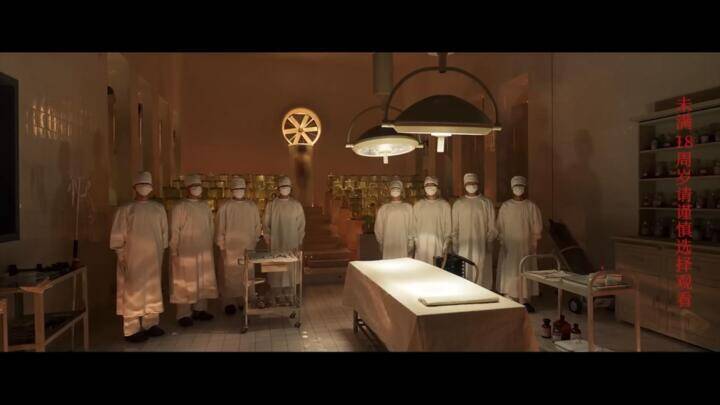
The Terrifying Truth About Unit 731
The Dehumanization Protocols: Unit 731
the physical structure was designed specifically to strip its victims of human identity long before they entered an operating room. Constructed in the Pingfan district outside Harbin, the massive six square kilometer complex operated behind concrete walls, guarded by high voltage fencing and armed sentries.
Inside the inner prison blocks, researchers and staff were strictly forbidden from referring to captives by name or as human beings.
Victims were logged purely as numbers and referred to exclusively as "maruta," the Japanese word for wooden logs, maintaining the bureaucratic cover story that the sprawling industrial site was merely a commercial lumber mill.
Unit 731 conducted horrifying physiological stress experiments to map the exact threshold of human biological survival.
Researchers systematically poured freezing water over bare limbs on naked subjects tied up outside in the frigid Winters to induce extreme frostbite, then documented the rate of tissue death by striking the blackened, frozen limbs with wooden clubs to see if they struck like solid ice before attempting various experimental thawing techniques on the conscious victims.
Control groups were subjected to total food and water deprivation to measure human survival limits under extreme environmental stress. Subjects were provided only sea water to study renal failure and saltwater poisoning. Additionally, researchers exposed individuals to high-dose X-ray radiation to analyze radiation sickness, skin necrosis, and cellular destruction over prolonged periods.
Researchers evaluated various chemical agents, including mustard gas, phosgene, cyanogen chloride, and Lewisite, within sealed glass observation chambers. Captives were exposed to controlled concentrations of airborne toxins to record physiological reactions, including pulmonary edema, chemical skin burns, and asphyxiation. Observers timed the interval between exposure and death to determine lethal dosage requirements for battlefield deployment.
Physiologists utilized large industrial centrifuges to measure the effects of extreme gravitational forces on human blood circulation and organ function. Subjects were strapped tightly into spinning mechanical arms and rotated at high speeds until death occurred. Researchers recorded exact timeframes for unconsciousness, internal hemorrhaging, and the displacement of bodily fluids driven outward toward the extremities under intense force.
When Soviet forces invaded Manchuria in August 1945, General Shirō Ishii ordered the immediate liquidation of the entire facility to eliminate all living evidence. Staff executed the remaining prisoners via lethal poison injections or poison gas, burned the corpses in mass pyres, and dynamited the main laboratory complex.
The perpetrators of these heinous act were not rogue military torturers but rather the undisputed academic and medical elite of Japan. Leading medical faculties including Tokyo Imperial University, Kyoto Imperial University, and Osaka Imperial University.
Prominent professors actively recruited their brightest graduate students, framing assignment to the covert facility in Manchuria as a prestigious, career defining honor that offered professional prestige
The doctors and technicians were bound by a strict code of silence and smuggled back to Japan, where many later went on to hold prominent post-war positions in medical academia, pharmaceutical corporations, and public health ministries without ever facing trial.
Add comment
Comments